
Building on the goodwill generated by the landmark handshake between the world's two powerful armies last month in Kumming in China, the two leaders decided to have a second military exercise in India.

The two leaders are understood to have discussed ways to expand bilateral ties. The 30-minute meeting took place on the sidelines of the ASEAN-India summit. Trade between the two countries has been growing at a rapid pace and the two nations have set an ambitious target of $10 billion to be achieved by 2010.

Describing the boundary question with China as a "complex issue", Prime Minister Manmohan Singh on Sunday said it cannot be "wished away" and both sides have an obligation to maintain peace and tranquility pending a solution.
China and Pakistan on Thursday signed two agreements and MoUs pertaining to space technology and energy as Beijing pledged $190 million for a satellite project.
Hu hoped that India and Pakistan would maintain the momentum of dialogue and jointly improve bilateral ties to promote peace, stability and development in South Asia.
The 'encouraging' extent of consensus between the two sides reflected in the joint document issued by them at end of Singh's talks would lead to stronger relations, they feel.
Rekindling the spirit of Indian doctor Dwarkanath Kotnis, held in high esteem in China for his services to the country, a joint Medical Mission from India and China will offer free consultations to several poor areas in the two nations under an MoU signed during Prime Minister Manmohan Singh's visit.
The two sides signed nine accords, including one on simplifying visa procedures.
China on Monday pledged an investment of $500 million for infrastructure development and resource building in India and agreed to a plan of action for economic cooperation between the two countries.
Be it the vexed boundary issue or nuclear co-operation or supporting India's bid for a permanent seat, whatever India and China say is mere candy floss, says B S Raghavan.
The Indian-style stupa will be ready by next year.
Prime Minister Manmohan Singh left Frankfurt for New York on a five-day visit to the US, during which he will address the UN General Assembly and hold bilateral talks with world leaders.
Suggesting Sino-India relations have implications for the world at large, Prime Minister Manmohan Singh Monday pitched for "greater substance and further depth" in bilateral ties.
They are scheduled to attend the ASEAN summit in Bali, Indonesia.

India exhaled a huge sigh of relief in the weekend as Bhutan's opposition People Democratic Party defeated the incumbent Druk Pheunshum Tshogpa in polls, setting the stage for a renewal of ties that had come frayed in the recent controversy over removal of subsidies for liquefied petroleum gas and kerosene.
Playing down its unsuccessful bid to establish diplomatic ties with Bhutan, China on Monday said it is glad to see New Delhi and Thimphu develop their relations further during the just-concluded visit of Prime Minister Narendra Modi.

In spite of irritants and hiccups in the relationship, a few deliverables are expected of the prime minister's visit to China, says Rup Narayan Das.
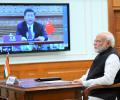
'If Asia does become a Chinese dominated space, it will not only be because India failed to get its economic act together but also because it did not stand up for its democratic credentials,' warns Shyam Saran, the former foreign secretary.

The Chinese inference is that if the Chinese visa is embossed on an Indian passport, held by Indian citizens from Arunachal Pradesh, it may be tantamount to recognising Indian sovereignty over Arunachal Pradesh, states Rup Narayan Das.

Chinese President Xi Jinping has announced that the 2.3 million strong People's Liberation Army, the world's largest, will be trimmed by three lakh.

'The border stand-off and the uncertainties that come with it should be a wake-up call on what makes for real rather than illusory power,' observes T N Ninan.

With India's political wheel turning full circle this year, National Security Advisor Ajit Doval will negotiate from an expanding diplomatic space, writes Ajai Shukla

Both India and China have realised that if border incursions keep reoccurring, other issues of mutual interest will remain unstable. Sheela Bhatt reports

Sheela Bhatt, who is travelling with Prime Minister Manmohan Singh on his two-nation visit, analyses the outcome of crucial talks between the PM and his Chinese counterpart in Beijing.
The previous democratically-elected government in Bhutan sought to get cosy with China. Will the new Tshering Tobgay dispensation mend the fences with India? Shubha Singh examines

Modi's arrival has changed the optics of the visit. There is a different demonstration of the confidence level in the Indian leadership, but not much has changed beyond that, reports Sheela Bhatt/Rediff.com.

Once again an Indian prime minister has realised that with Pakistan and China, things will not move as he wishes.

President Xi Jinping's visit may put relations between India and China on a new trajectory
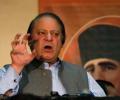
The Sino-Pakistan relationship remains fundamentally asymmetrical: Pakistan wants more out of its ties with China than China is willing to offer. Today, when Pakistan's domestic problems are gargantuan, China would be very cautious in involving itself even more, says Harsh V Pant.
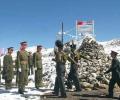
Suddenly the sands are shifting and even friends are acting strange.
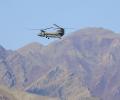
'Our strategy should be to 'hold the line' in the north on the Sino-Indian land frontier, but maintain and, if possible, enlarge India's current edge in the maritime south.'

'Does it mean that we are witnessing the end of an era?' 'Probably not, but the post-Trump trade war has certainly brought a lot of instability in China,' notes Claude Arpi.

Combining affordable IT with native Indian ingenuity and entrepreneurship F C Kohli believed would enable Indian small businesses match anyone and thrive.
